Version note: This guide follows the current TallyPrime ODBC workflow. Menu names can vary slightly by release. Test first with a backup company.
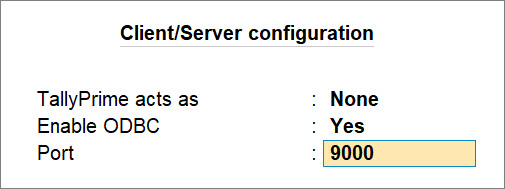
Enable ODBC in TallyPrime before connecting Excel.
What you need
- TallyPrime with a company open.
- Microsoft Excel and a compatible Tally ODBC driver.
- Matching 32-bit or 64-bit settings between TallyPrime, the driver, Windows and Office.
- Permission to connect if TallyPrime is running on another computer.
Step 1: Enable ODBC in TallyPrime
- Open TallyPrime and load the company.
- Press Alt+Z (Exchange) > Configure.
- Under Data Synchronisation, open Client/Server Configuration.
- Set Enable ODBC to Yes.
- Note the port and save the configuration.
- Keep TallyPrime and the company open while Excel connects.
If the ODBC service does not appear to be running, check Alt+F1 (Help) > About > Client/Server and ODBC Services. If the port is occupied, choose another available port and restart TallyPrime.
Step 2: Connect Microsoft Excel
- Open Microsoft Excel.
- Go to Data > Get Data > From Other Sources > From ODBC.
- Select the Tally data source, such as
TallyODBC64_9000, and click OK. - Select the company loaded in TallyPrime.
- Choose the required data, such as Ledger or Stock Item.
- Click Transform Data to filter or remove unnecessary columns.
- Click Close & Load to place the data in Excel.
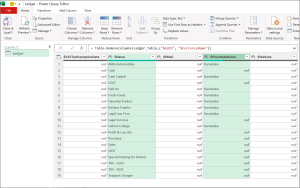
Use Power Query to select and transform fields.
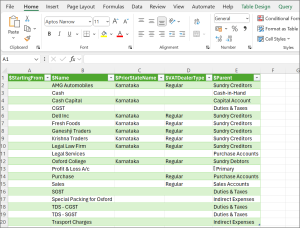
Example of TallyPrime data loaded into Excel.
Step 3: Refresh the Excel report
- Confirm the company, date range and selected fields.
- Use Excel or Power Query filters instead of importing unnecessary data.
- Save the workbook.
- Select Data > Refresh All when updated figures are required.
- Test another date range before using the workbook for management reporting.
Common ODBC errors and solutions
- Driver is not listed: Check that the driver is installed and its bitness matches Excel.
- Client without ODBC: Check the port under About > Client/Server and ODBC Services; choose another port if occupied.
- Data Source Name not found: Enable ODBC, confirm the port and run TallyPrime with the required permissions.
- Connection cannot be opened: Confirm the company is open, ODBC is enabled and the port is allowed through the local firewall.
- No records are returned: Check the company, collection/report, date filters and user permissions.
- Refresh fails on another computer: Install the same compatible driver and recreate the connection.
Security and data-safety tips
- Use ODBC only on a trusted local network or VPN.
- Do not expose the ODBC port directly to the public internet.
- Keep backups of important Excel reports and remove confidential data before sharing.
Useful related guides
- How to Backup and Restore Company Data in TallyPrime
- How to Generate an e-Invoice in TallyPrime
- How to Reconcile GSTR-2B in TallyPrime
Conclusion
ODBC is useful for analysing TallyPrime data in Excel while keeping accounting entries in TallyPrime. Start with a simple ledger or stock report, verify the figures, and then expand the workbook into dashboards or periodic management reports.
Always test the connection with a backup company before using it for live reporting.


No comments:
Post a Comment